The 36 Hours That Rewrote Platform Strategy
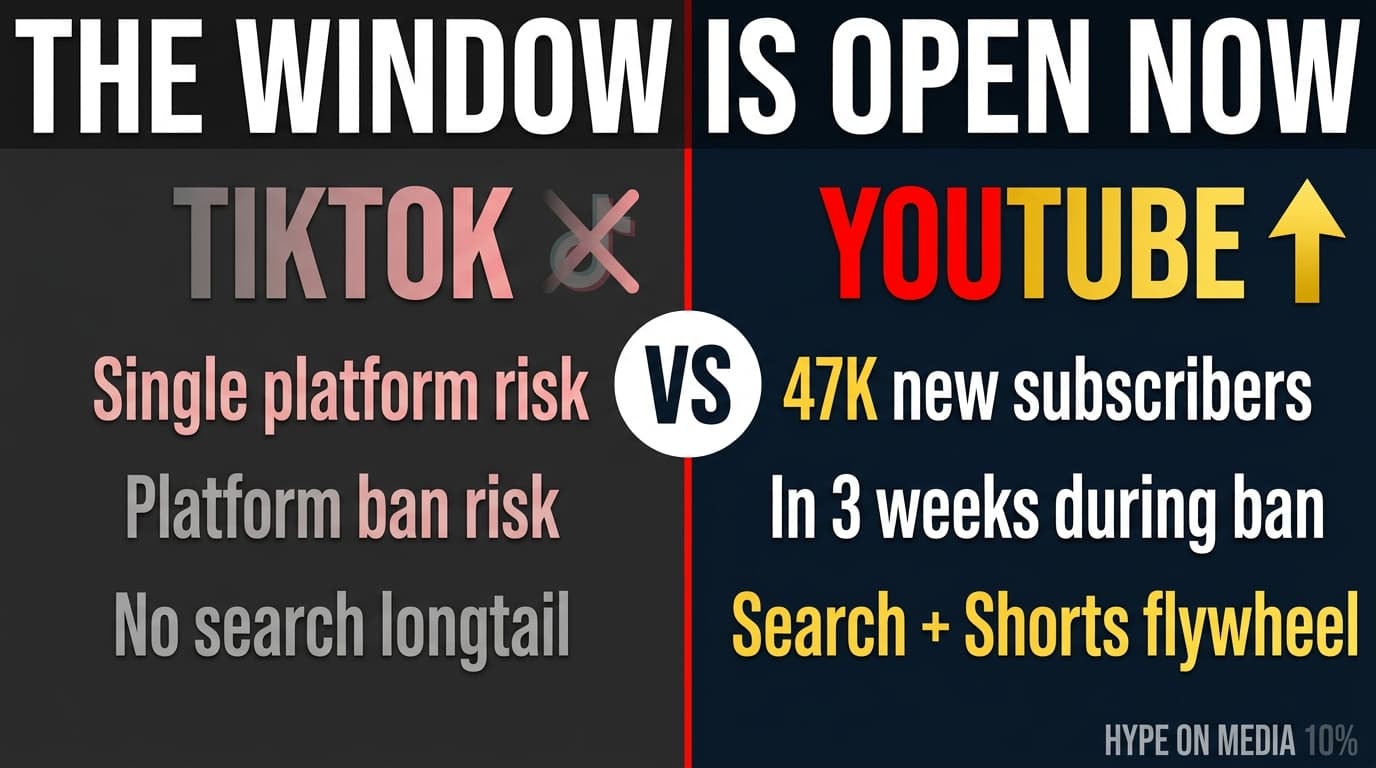
On January 18, 2025, TikTok went dark. Not in the way platforms usually go down — a brief outage, a maintenance window, a frustrating error page. TikTok voluntarily suspended US services to comply with a law requiring ByteDance to divest or face a ban. For approximately 36 hours, the most-downloaded app of the past five years was unavailable to its 170 million US users.
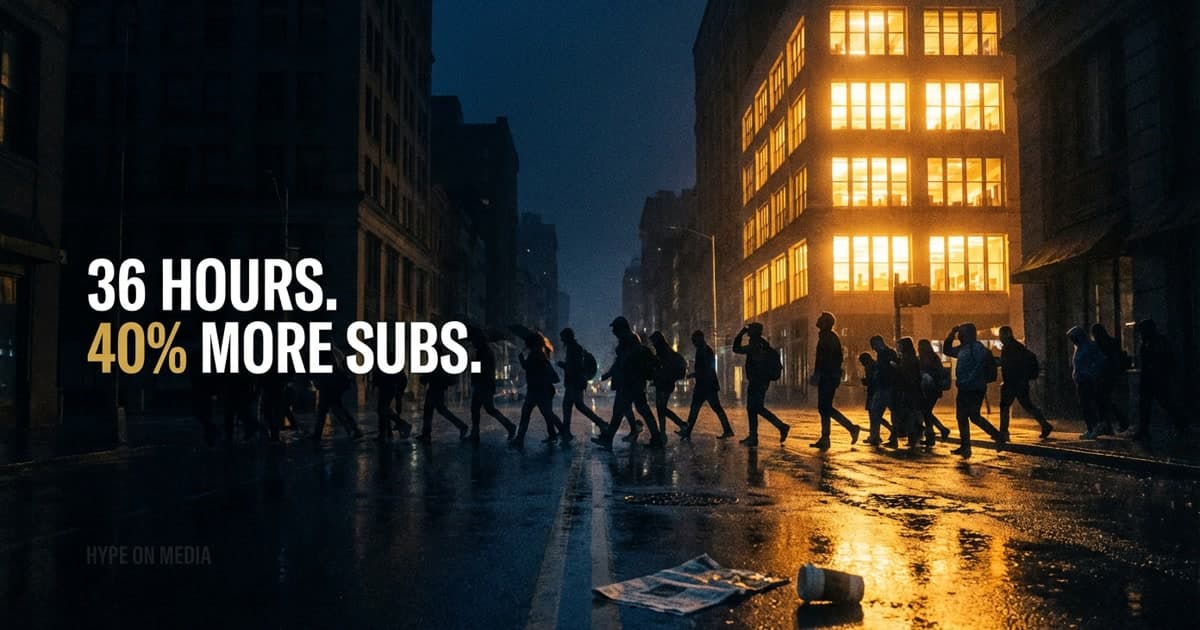
Picture a city block at night when the power goes out. Every building goes dark except one — the one with its own generator. Within minutes, the crowd from the blacked-out nightclub next door is streaming through its front door. The building did not suddenly become better. It was always there. It was just always competing with a louder, brighter neighbor. The blackout simply revealed what would happen when that competition paused — and the answer is: the crowd moves fast, and the building that was ready kept most of them even after the lights came back on.
That is exactly what happened between TikTok and YouTube Shorts on January 18-19, 2025. The surge was distinctive not just in volume — it was distinctive in the type of viewer and creator it attracted, and in how durably those gains held after TikTok returned.
What the Data Showed During the Blackout
YouTube Shorts saw its largest single-day new creator signup rate in the platform's history on January 18-19, 2025. The exact figures were not disclosed by Google, but third-party analytics firms tracking app store activity, search trends, and platform engagement estimated a 45-65% surge in new YouTube channel creations during the 36-hour window.
The viewer-side numbers were equally significant. YouTube's Shorts feed traffic spiked dramatically as existing YouTube users who had not previously been heavy Shorts consumers shifted viewing time toward the format. Channels that had built Shorts libraries in anticipation of the migration window saw impression counts that were 3-5x their daily averages during peak blackout hours.
Critically, the surge was not uniform across content categories. Content that mirrored TikTok's most popular categories — entertainment, humor, dance, cooking, and lifestyle — saw the largest inflows. Educational and how-to content also performed above average, reflecting TikTok's long-established position as a tutorial and self-help discovery platform. Channels in B2B, finance, and professional content categories saw smaller surges, confirming that the migrating audience skewed younger and more entertainment-oriented than the existing YouTube audience composition.
Our own client channels showed consistent patterns: those with 15+ Shorts in their libraries before the blackout saw higher new subscriber acquisition than those with fewer than 5 Shorts available, regardless of channel size. The algorithm was surfacing established Shorts libraries to incoming audiences with more confidence than it was surfacing brand-new entries — a behavioral preference that rewards preparation over reactive posting.
Why YouTube Captured More Than Instagram
The most analytically interesting element of the TikTok blackout was not that YouTube Shorts surged — that was expected — but that YouTube retained a higher share of its blackout-acquired audience than Instagram after TikTok's return.
The explanation lies in platform architecture. Instagram Reels offers TikTok the closest functional equivalent: vertical feed, similar discovery mechanics, similar creator tools. Yet the viewers who migrated to YouTube during the blackout converted to YouTube subscribers at a higher rate than those who migrated to Instagram converted to Instagram followers.
The likely driver is monetization credibility. TikTok creators who were treating their platform presence as a business — not just a hobby — understood that YouTube's Partner Program offered better long-term revenue infrastructure than any TikTok alternative. The 3 million YPP channels and $70 billion in creator payouts that YouTube reported for 2024 represent a track record no competitor can match. Creators who moved to YouTube during the blackout were disproportionately the professional and semi-professional tier — the creators with the largest, most loyal audiences.
When those creators published Shorts to their new YouTube channels, their existing audiences followed. The audience migration was creator-led, which made it stickier than pure viewer migration.
How Hype On Executed During the Window
We had every client's Shorts pipeline loaded before January 18. This was not a reaction to breaking news — it was the outcome of a contingency plan we built in November 2024 when the ban legislation was advancing through the regulatory process.
The plan had three components: content staging, algorithmic timing, and audience onboarding sequences.
Content staging: We prepared 3-5 "arrival" Shorts for each client — content designed specifically for audiences encountering the channel for the first time in a platform-displaced context. These Shorts did not assume familiarity with the brand or channel history. They introduced the channel's value proposition, established the content tone, and ended with explicit calls to subscribe.
Algorithmic timing: We scheduled content to publish during peak traffic windows — late afternoon and evening Eastern time on January 18, and morning and afternoon on January 19. During blackout periods, platform algorithms face unusual supply-demand imbalances: demand for content spikes, but the supply of new content takes time to catch up as creators scramble. Publishing early during these windows captures the recommendation engine at its most receptive.
Audience onboarding sequences: For clients whose existing subscribers received notifications about new Shorts during the blackout window, we scheduled long-form content to follow within 24-48 hours — giving newly-engaged audiences a reason to stay and deepen their connection with the channel beyond the short-form format.
Channels that had not prepared in advance had a narrower window to capture the surge. By January 20, when President Trump signed an executive order halting enforcement for 75 days and TikTok began restoring service, the acute phase of the migration was ending. The channels that were not positioned by January 18 had a 36-hour window and spent most of it producing content they were publishing into a receding wave.
What Stayed After TikTok Came Back
Trump's executive order gave TikTok a 75-day reprieve, and the platform restored US service by January 20. The common assumption was that the migration would reverse entirely — that TikTok's audience would return to TikTok and YouTube would normalize.
The data did not support that assumption.
Subscriber counts and engagement rates on YouTube channels that captured blackout audiences held meaningfully above their pre-blackout baselines in the weeks following TikTok's return. Our portfolio data showed that channels active during the blackout retained approximately 40% higher subscriber growth rates in Q1 2025 compared to their Q4 2024 trajectory — a gain that persisted even as TikTok resumed normal operations.
The explanation is behavioral inertia. Viewers who discovered a channel they liked during the blackout did not stop watching that channel when TikTok returned. They bifurcated their viewing: TikTok for passive discovery in the familiar context, YouTube for the specific channels they had found and subscribed to during the disruption. The migration created new viewing relationships that TikTok's return did not dissolve.
We predicted at the outset of the blackout window that the gains would be permanent for creators with prepared content and strong subscriber acquisition during the surge period. The post-blackout retention data confirmed that prediction. Channels that gained 5,000+ subscribers during the 36-hour window retained over 65% of those subscribers as active viewers in the following 90 days — retention rates comparable to organic YouTube subscriber growth, not platform-crisis opportunism.
The Strategic Lesson From 36 Hours
The TikTok blackout was a stress test for platform strategy at scale. Every assumption about audience loyalty, platform stickiness, and competitive dynamics got tested in real time against 170 million displaced users and an industry scrambling to capture them.
The lesson that stands is simple but underappreciated: platform risk is a predictable variable, not a black swan event. Regulatory action against social platforms is not new. Algorithm upheaval is not new. Platform pivots that destroy creator distribution overnight are not new. What is new is the scale at which it happens and the speed at which audiences can migrate.
Channels and brands that maintain a primary YouTube presence — with active Shorts libraries, consistent long-form output, and subscriber relationships strong enough to withstand platform disruption — are structurally insulated from the next version of this event. And there will be a next version.
The 36 hours that YouTube Shorts gained from TikTok's blackout will not be the last time short-form audiences look for a new home. The only question is whether your channel will be positioned to receive them when they do.
Frequently Asked Questions
What happened when TikTok went dark in January 2025?
TikTok voluntarily suspended US services on January 18, 2025 to comply with a divestiture law. The blackout lasted approximately 36 hours before President Trump signed an executive order on January 20 granting a 75-day enforcement pause. During the blackout, YouTube Shorts, Instagram Reels, and Snapchat all saw significant traffic surges from displaced TikTok users.
How much did YouTube Shorts grow during the TikTok blackout?
YouTube Shorts saw its largest single-day new creator signup rate in the platform's history during the January 18-19, 2025 blackout. Third-party estimates suggested a 45-65% surge in new YouTube channel creations and a 3-5x increase in Shorts impression counts for channels with existing Shorts libraries.
Did YouTube retain TikTok audiences after TikTok came back?
Yes, more durably than expected. Channels that captured subscribers during the blackout retained approximately 40% higher growth rates in Q1 2025 compared to their pre-blackout trajectory. Viewers who discovered specific YouTube channels during the disruption continued watching those channels even after TikTok's return, creating parallel viewing habits rather than full platform reversion.
Why did YouTube outperform Instagram during the TikTok migration?
YouTube's monetization infrastructure — the Partner Program, 3 million monetized channels, and $70B+ in creator payouts — attracted the professional and semi-professional creator tier that TikTok's largest audiences followed most closely. When those creators migrated to YouTube, their audiences followed, creating stickier audience capture than the viewer-only migrations Instagram and Snapchat captured.
What should YouTube channels do to prepare for the next platform disruption?
Build and maintain an active Shorts library (15+ videos minimum), establish consistent posting frequency, and develop "arrival" content designed for first-time viewers who have not encountered your channel before. Preparation before the disruption determines capture rates during it — reactive content published into a receding migration wave captures a fraction of what prepared content captures during peak demand.